Bachelor of Theology
On-campus
The Bachelor of Theology prepares and equips you to teach the Word of God with confidence and to serve in leadership within a Christian church, community, or organisation.
Full-time: 3 years ׀ Part-time: 6 years ׀ NQF Level 7 ׀ SAQA ID 61870
CONTACT MODE: Contact learning takes place in English at the campus in Muizenberg. Individual modules of each programme are completed over the course of a semester or, in some cases, a term. GWC makes use of an online learning platform, Canvas, to give students access to readings, assignments, announcements, and other academic resources. When required by extreme circumstances, learning may be offered through emergency remote learning or blended learning.
Overview
The Bachelor of Theology (BTh) offers a rich, classical theological education that shapes both mind and heart for a lifetime of Christian service.
Through this qualification, you will develop a deep understanding of the Bible alongside the practical skills needed to minister and lead in Christian communities, and to contribute meaningfully to the life and wellbeing of the wider society.
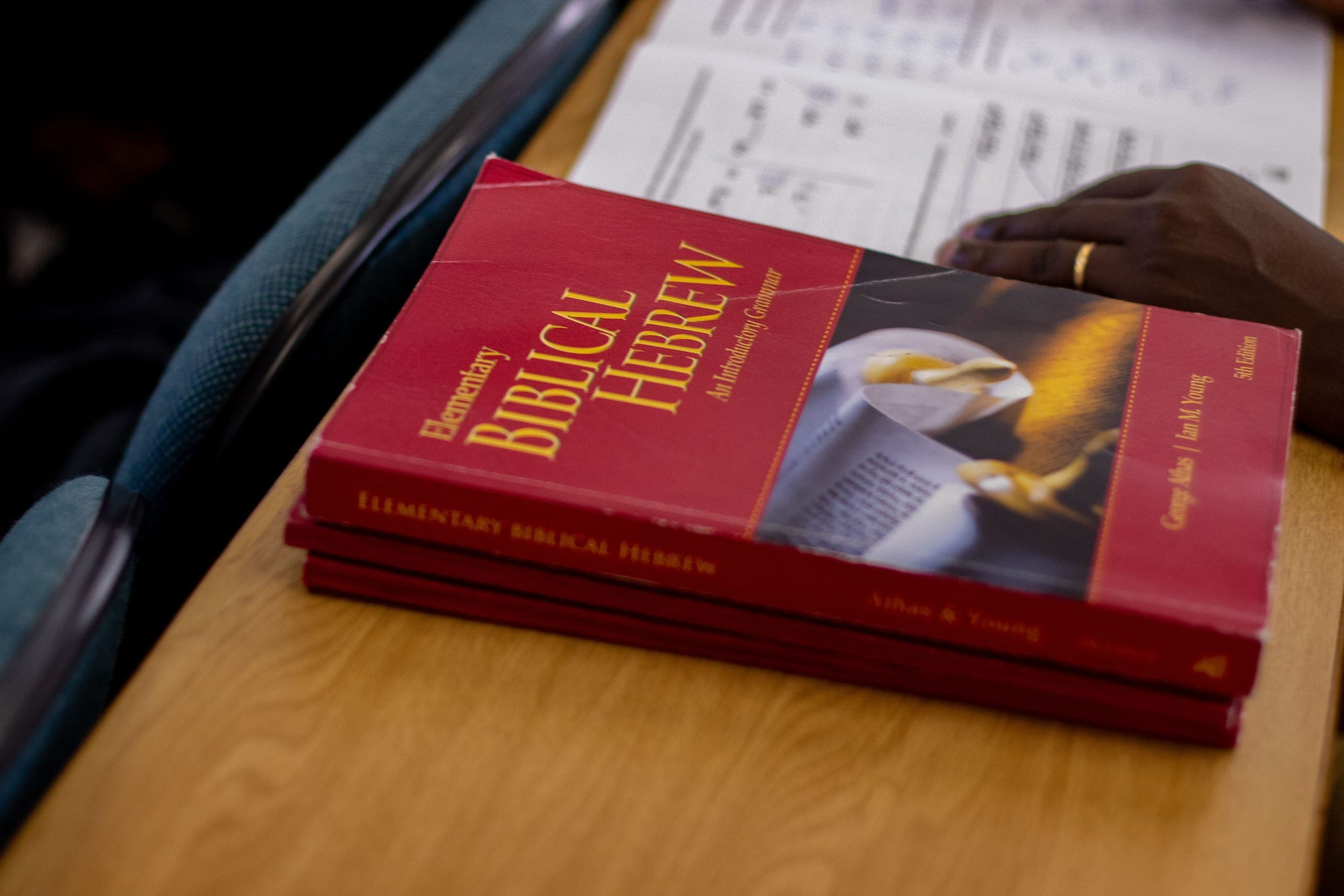
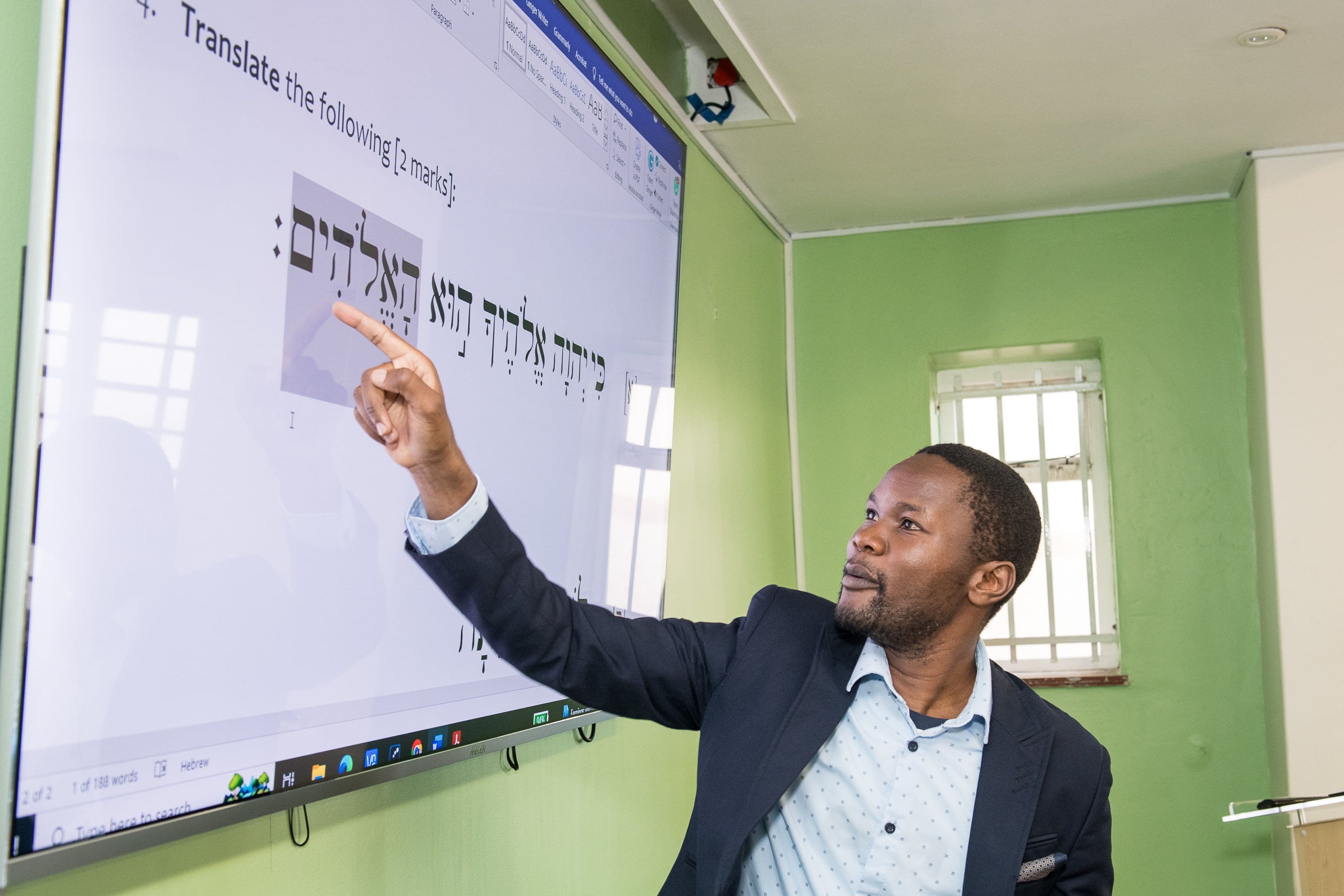
The programme comprises a range of subjects including Systematic Theology & Ethics, Church History, Biblical Studies (with Old Testament, Hebrew, New Testament and Greek), Mission & Culture and Practical Ministry. As a BTh graduate, you will be able to:
- Take a pastoral leadership role in a Christian church, community or organisation.
- Undertake a regular preaching or teaching role.
- Train individuals for various ministries inside and outside the church.
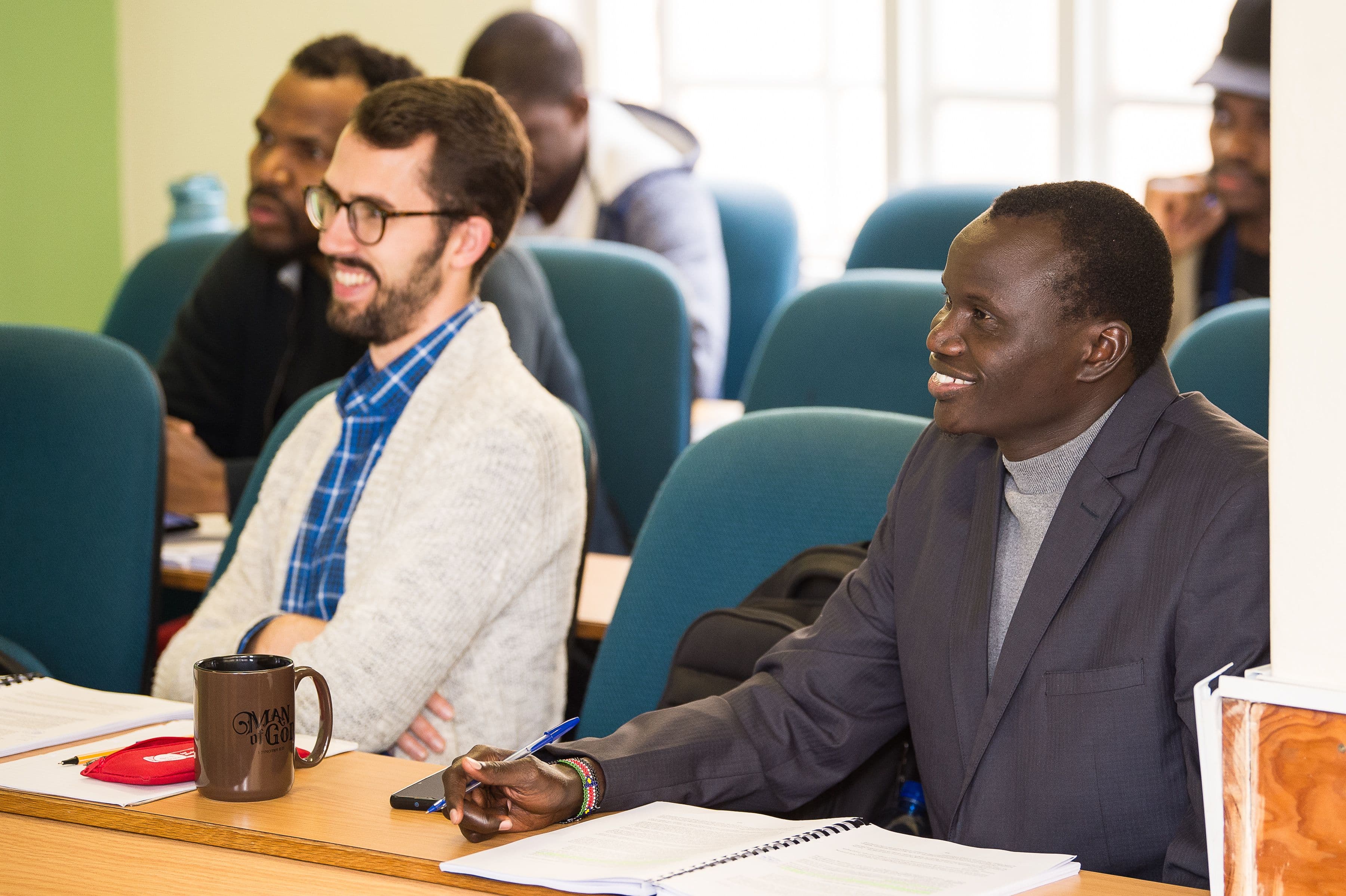
My time at GWC has changed how I read and interpret the Bible. Before coming to GWC, I had a narrow view of Scripture, but through my time spent in lectures here, I have become fully grounded and have a deeper understanding of the Word of God. The way in which we engage with the original languages, both Greek and Hebrew, is the biggest gain of all.
Marko Mou from South Sudan, BTh
Who Should Apply?
- Those wanting to serve in church pastoral leadership roles, including as youth and children’s workers.
- Those wanting to serve in parachurch ministries.
- Those wanting to serve on mission, either locally or internationally.
- Those wanting to be thoroughly equipped to evangelise in the workplace and contribute in a lay capacity within their local church.
Admission Requirements
National Senior Certificate, or the equivalent thereof, with a minimum of 60% in English Language (HG first language), coupled with an achievement rating of 4 or better in four subjects from the designated subjects list (Per Government Gazette No. 751, 11 July 2008). Admission through Recognition of Prior Learning (RPL) is permitted for a maximum of 10% of the enrolment for any year.
For entry into this programme, international students are required to meet the admission requirements outlined by USAF on their website.
English Proficiency
The easiest way to provide evidence of your English proficiency is by completing the affordable online National Benchmark Test. Book your test online, select the Academic Literacy Test, and send your scores to us along with your application. See here for more information.
The minimum acceptable English Language requirement for undergraduate courses is an overall score of 6.0 on the International English Language Testing System (IELTS), and 5.0 for the written element. This is equivalent to 213 in the computerised Test of English as a Foreign Language (TOEFL) test, 550 in the written TOEFL test, or 79-80 in the internet-based TOEFL test.
Foreign students who have English as a second language may be required to complete a TOEFL test (or similar) to prove proficiency in English at a level suitable for academic study.
Find out more about the IELTS and TOEFL tests here, and locate a learning and testing centre near to where you live.
Course Structure
Download the Bachelor of Theology course structure
Bachelor of Theology Fees
Bachelor of Theology Bursaries
Applicants who have been accepted into the Bachelor of Theology programme may apply for bursary assistance. Bursaries are awarded on a needs-only basis and are usually only partial awards. GWC regrets that bursary funding cannot be offered to every bursary applicant.
International Students
All applicants who possess a foreign school leaving or post-school leaving qualification (achieved outside of South Africa) must submit an evaluation certificate from USAF (school-leaving qualification) or SAQA (post-school qualification/tertiary qualification). These certificates provide an evaluation of the equivalence of your qualification to the South African university system.
It will take 2-3 weeks to obtain an evaluation certificate from USAF; it will take 3-6 months to obtain an evaluation certificate from SAQA.
For more information, check the Prospectus.